Qurbani is a very meaningful act of worship during Eid al-Adha, as it reminds Muslims of the obedience and devotion of Prophet Ibrahim (AS), who was willing to sacrifice his own son for the sake of Allah. The spirit of this worship, along with its pure intention, is to distribute the meat fairly and with compassion for the sake of Allah.
Allah says in the Quran: “Eat from them and feed the poor and needy.” Surah Al-Hajj (22:36)
Hence, the true spirit of Qurbani is to share the blessings, especially with those who struggle to afford meat throughout the year. Qurbani is not a ritual, but it is an act of gratitude, charity, and care for the community.
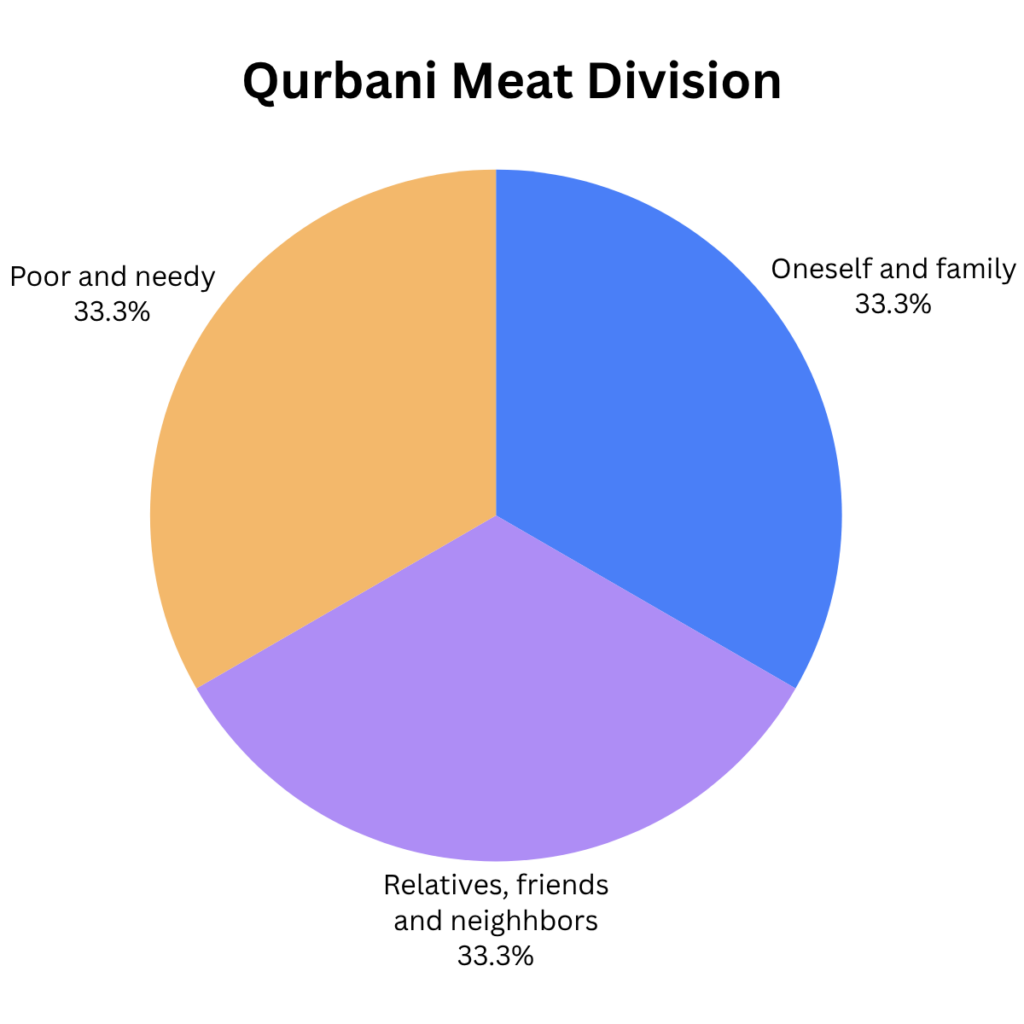
According to common Islamic traditions, it is divided into three parts.
One-third for yourself and your family.
One third for relatives, friends, and neighbors.
One third for the poor and needy.
This method ensures that underprivileged families also benefit from the sacrifice.
The Prophet Muhammad ﷺ encouraged Muslims to eat from the sacrifice, share it with others, and give in charity.
Allah clearly explains the essence of Qurbani in the Quran.
“Neither their meat nor their blood reaches Allah, but your piety reaches Him.” Surah Al-Hajj (22:37)
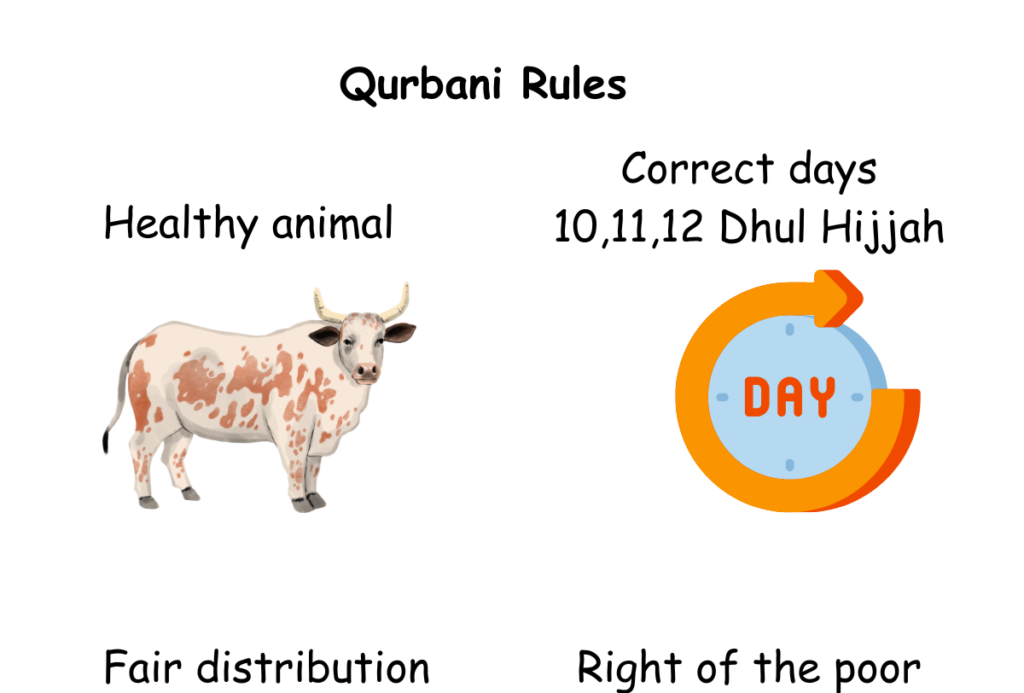
Qurbani teaches sacrifice, compassion, generosity, and obedience to Allah. It is a reminder to support those facing hardship and teaches care for humanity. Understanding how the meat is divided and the rules for Qurbani helps Muslims fulfill this important act correctly.
In many communities, it is difficult for a person to sacrifice himself or to reach out to orphans, widows, and deserving people. Hence, charitable organizations do the Qurbani on behalf of others to help people distribute their sacrifice to the deserving. It is allowed to do a sacrifice through such an organization, provided that it is trustworthy and transparent.